FOUNDING DESIGNER @ AUGRADE
Based in San Francisco Bay Area

ENVIRONMENTAL
WHATABOUTISM


YEAR

2023


MASTERS THESIS

Parsons School of Design


ROLE

Researcher, Maker, Comedian


IMPACT

People walked away recognizing the unintended consequences of their daily actions and the need to question simplistic sustainability claims, all sparked through a humorous, thought-provoking experience.
WHAT IS ENVIRONMENTAL WHATABOUTISM?


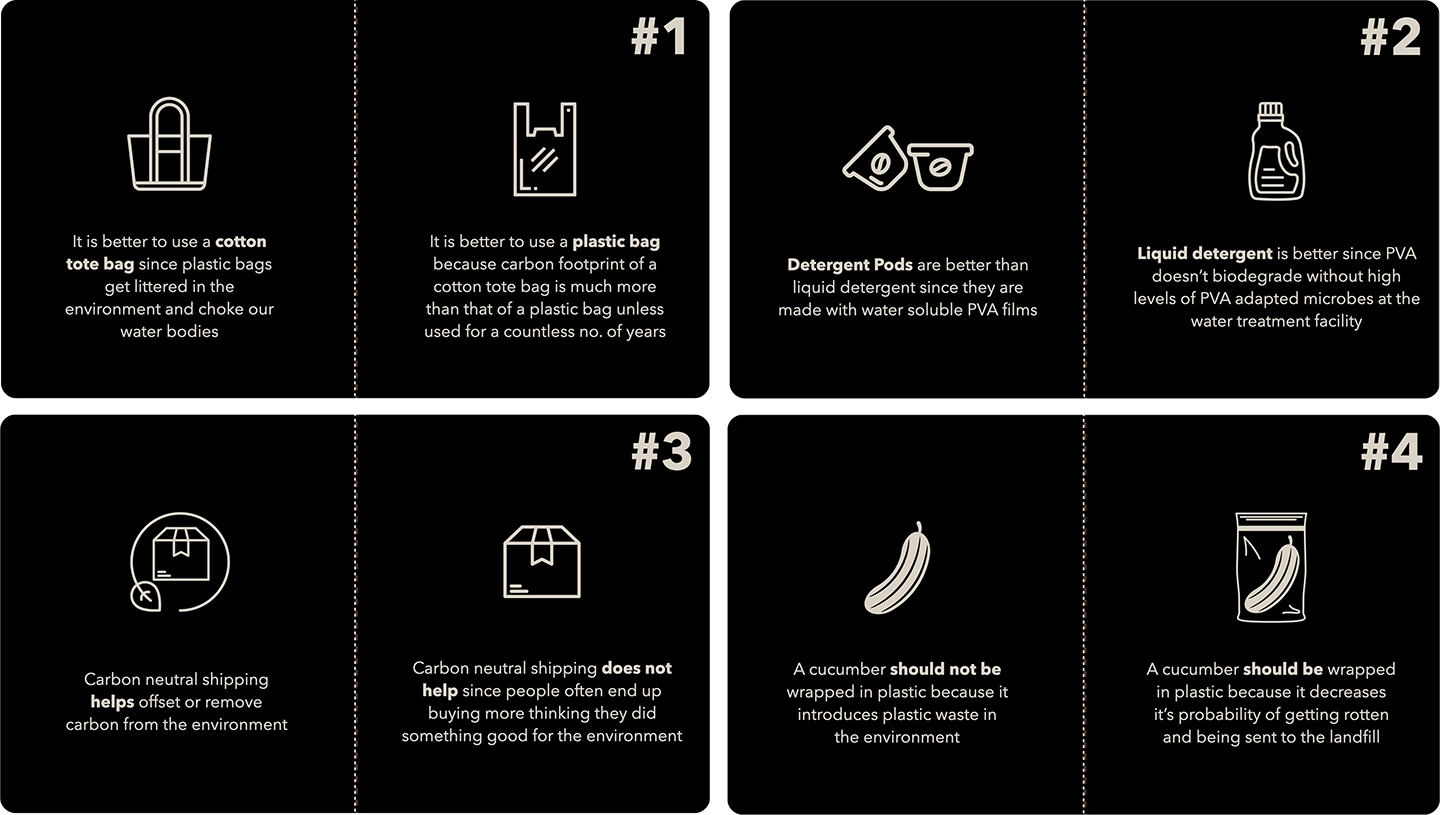
Environmental Whataboutism is a term I coined to describe the dilemmas we face in everyday sustainability decisions. Whenever I try to choose a “sustainable” option, new issues emerge, making alternatives seem just as unsustainable.


The idea draws from whataboutism, where criticism is redirected by raising a competing concern. In environmental choices, this shows up when every decision prompts a new “but what about…?” question, making it difficult to know which option is truly better.


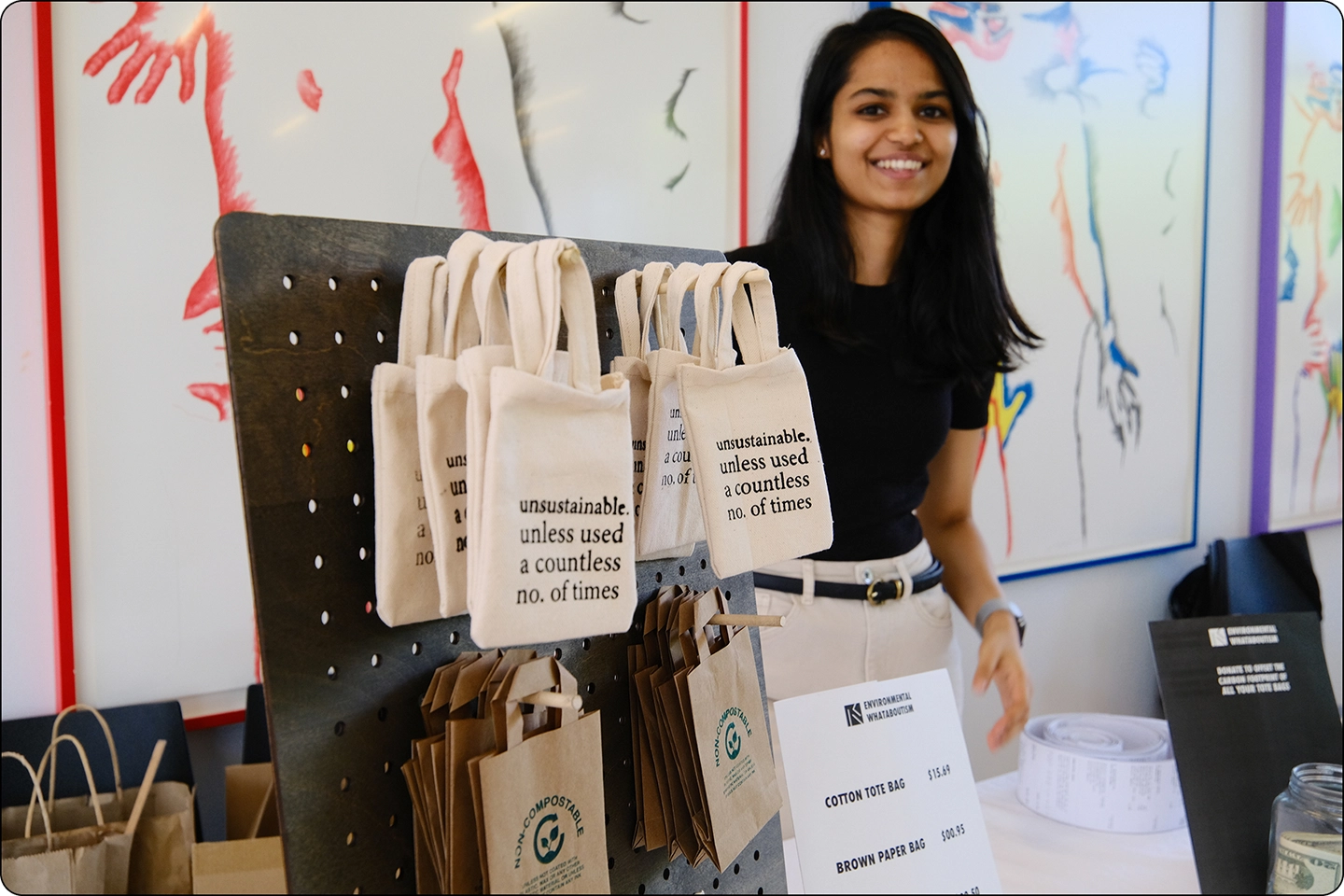
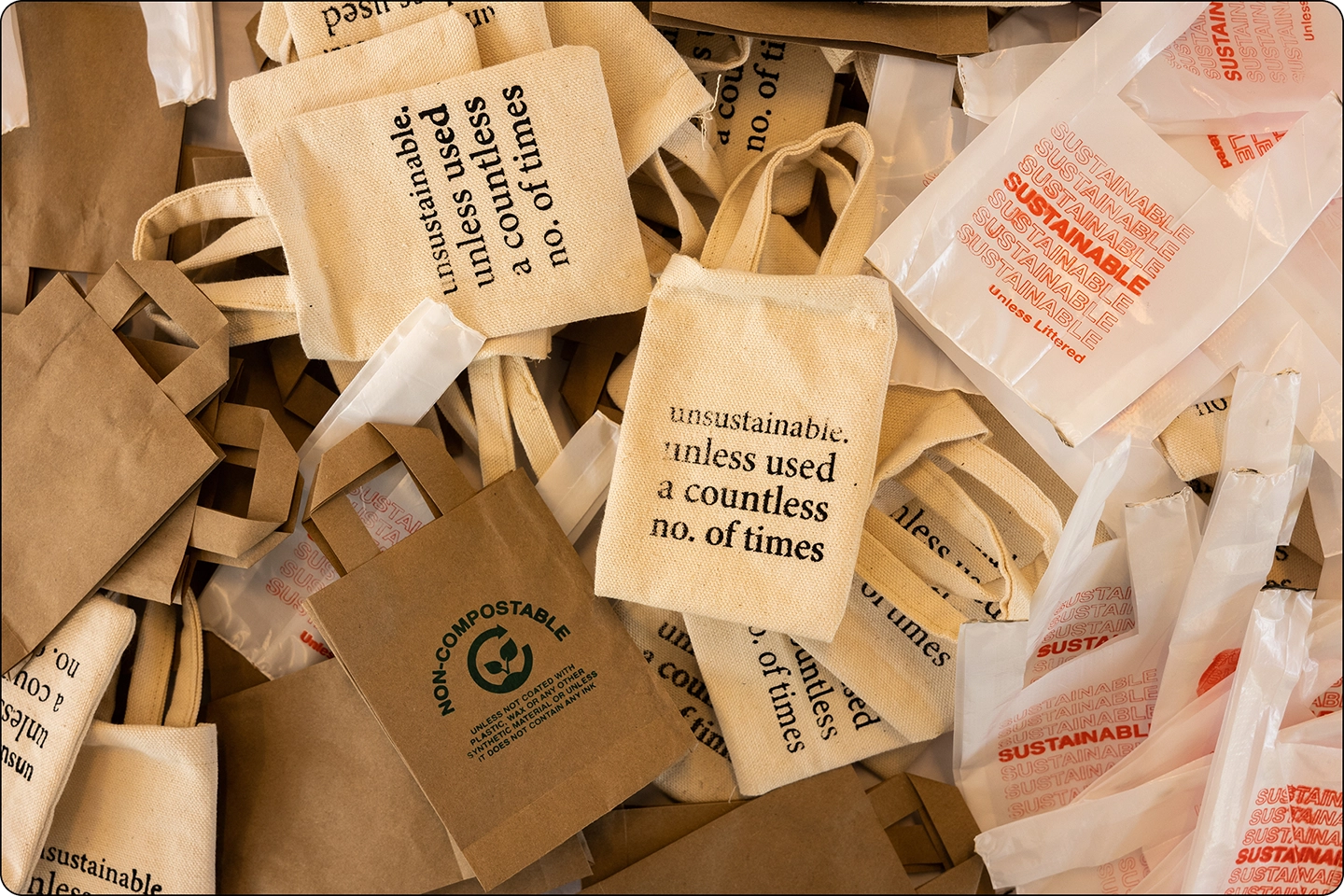
Plastic bags pollute, cotton totes require significant resources, and paper bags biodegrade but contribute to deforestation and emissions. I explored these tensions by creating and distributing miniature versions of each bag type and pairing them with a stand-up routine that highlighted the paradoxes of sustainable living.


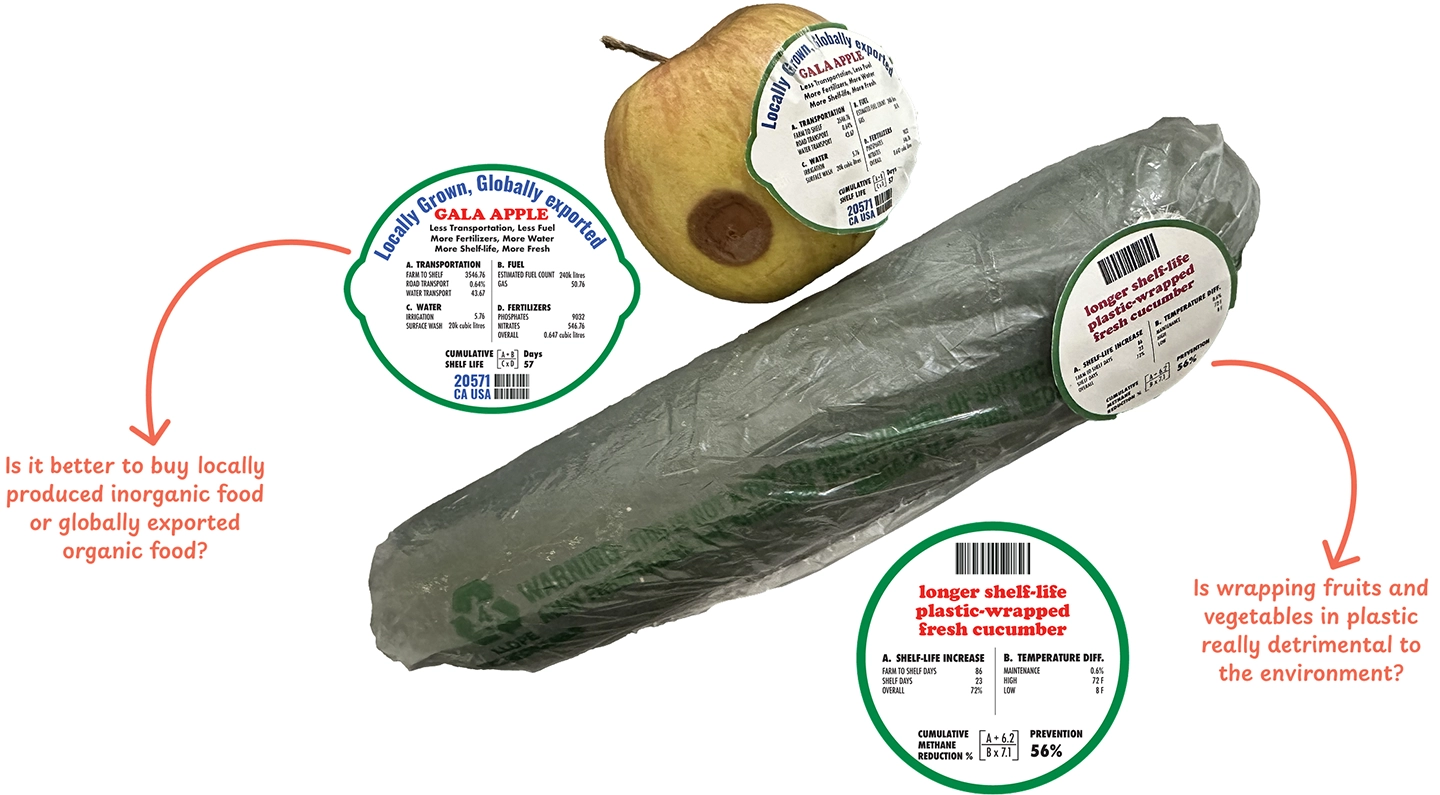
EXAMPLES OF DAILY DILEMMAS


UNPACKING THE DILEMMAS VIA SYSTEM THINKING


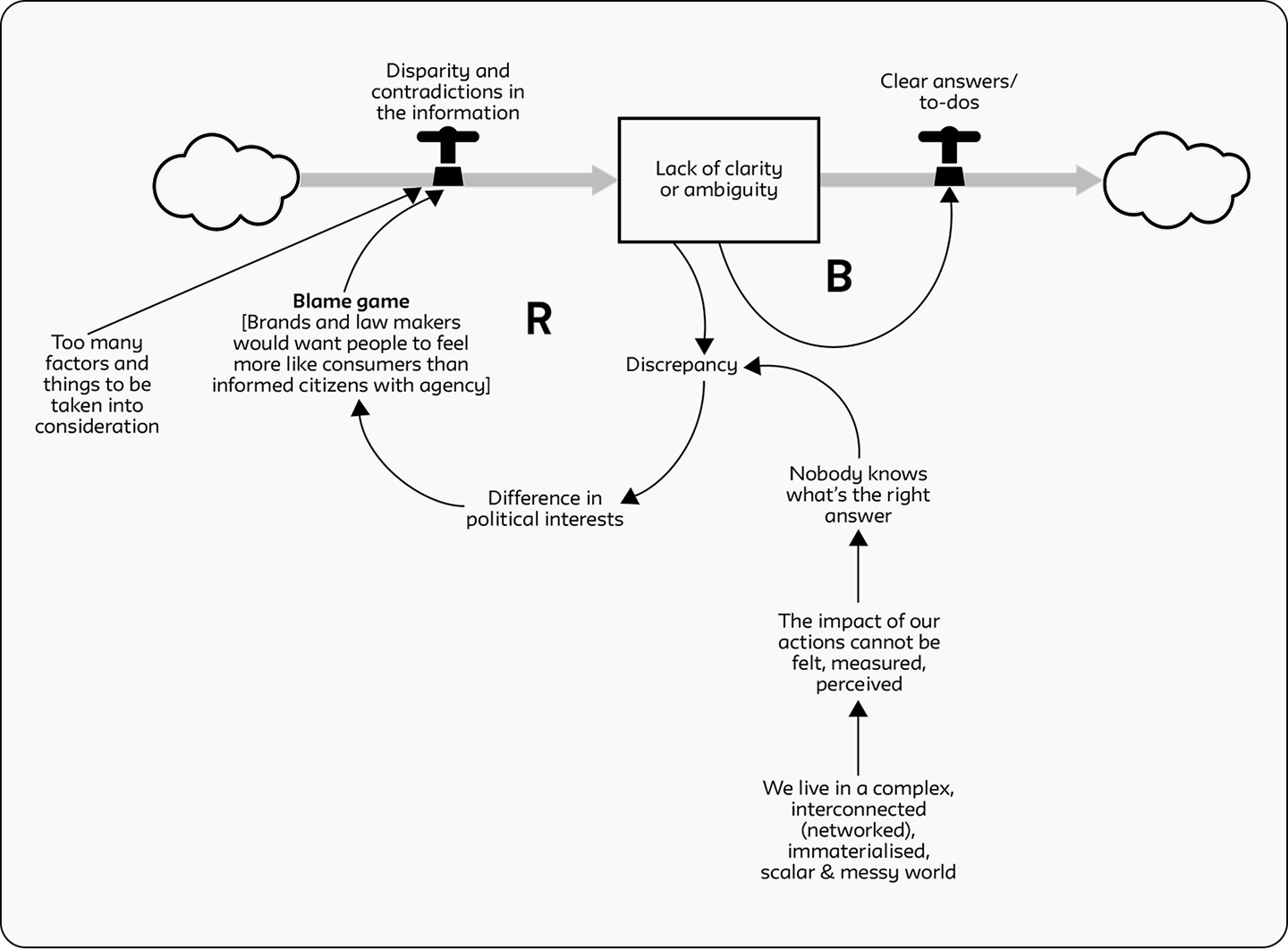
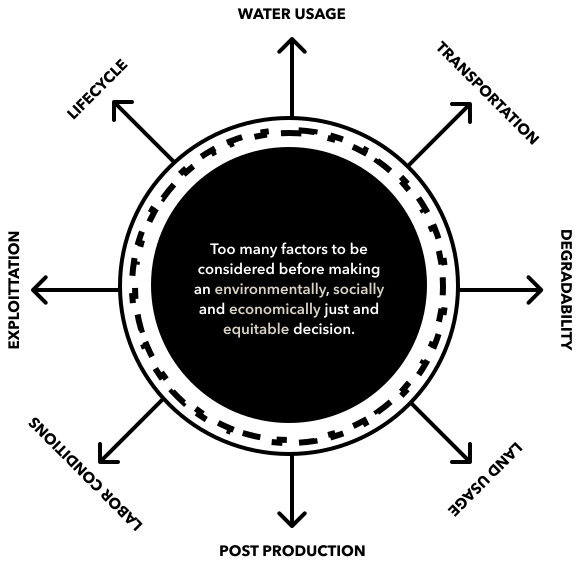
Mapping the system through a stock-and-flow diagram helped me see how conflicting data and highly interconnected, immaterial, and complex systems create ambiguity around what is “sustainable.” I inferred that these dilemmas stem from systemic complexity and inconsistent information, not just from individual decisions.


INCONSISTENT INFORMATION


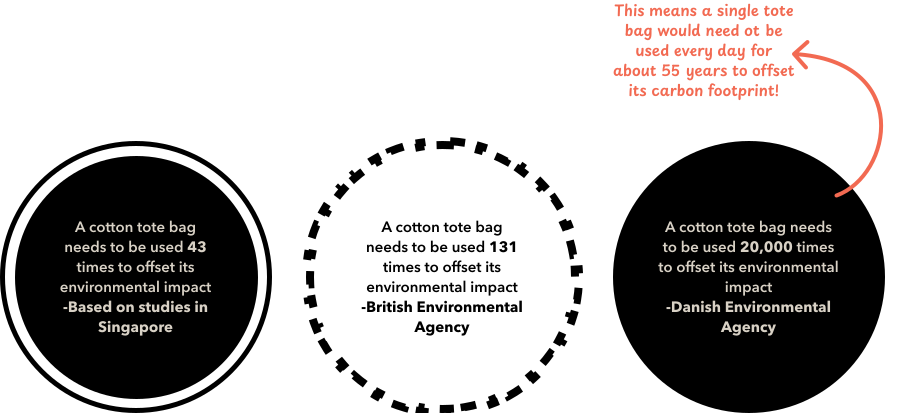
Conflicting data became one of the clearest drivers of the dilemma: depending on the source, a tote bag may need 43, 131, or even 20,000 uses to offset its carbon footprint.


THE ROOT CAUSE - SYSTEMIC COMPLEXITY


We live in a complex, messy, interconnected world where it is impossible to anticipate all the unintended consequences of our actions.


THE GOAL

  • Reveal the unintended consequences of everyday choices.
  • Show that our actions often don’t produce the results we expect, what feels sustainable may not be.
  • Leave audience with a sense of astonishment and bewilderment, highlighting the complexity and messiness of the world.


MATERIALIZATION


To achieve this, I adopted a design-led research approach and created provotypes that sparked conversation about the hidden consequences of ordinary actions.


CALCULATING THE CARBON FOOT PRINT OF COTTON TOTE BAGS


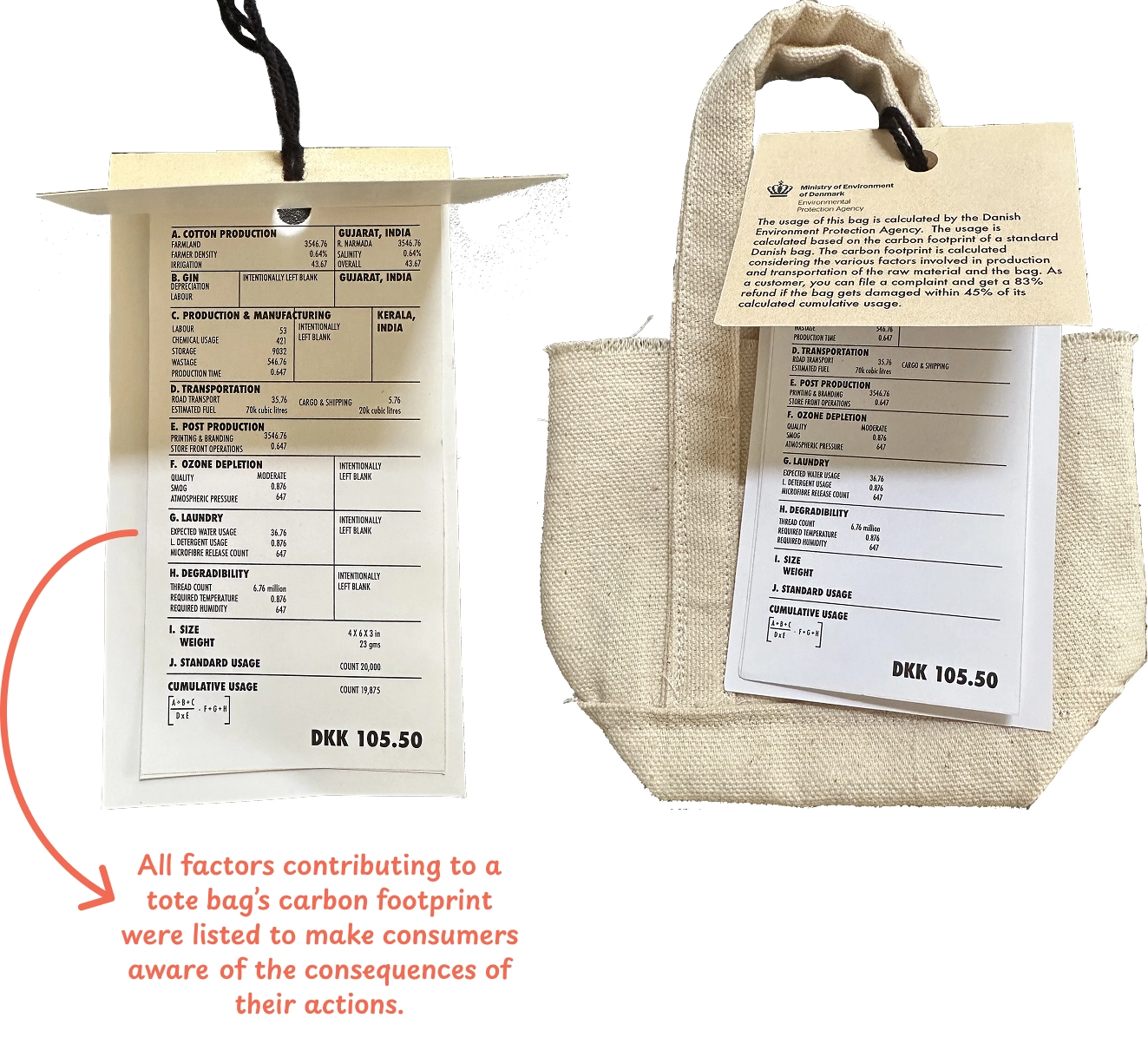
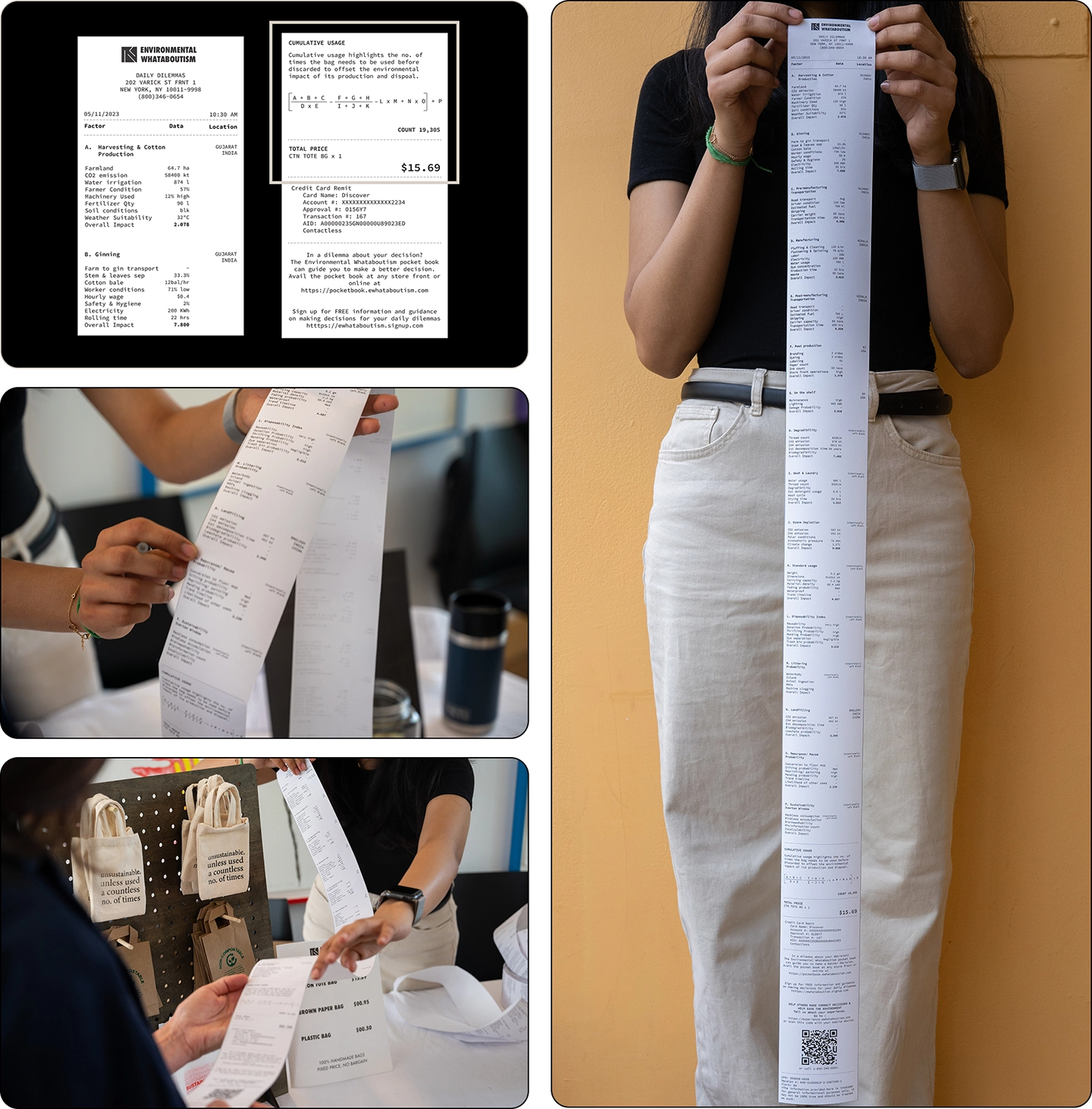
I sewed tiny cotton tote bags with long labels listing all the factors that accounts to bags' carbon footprint.


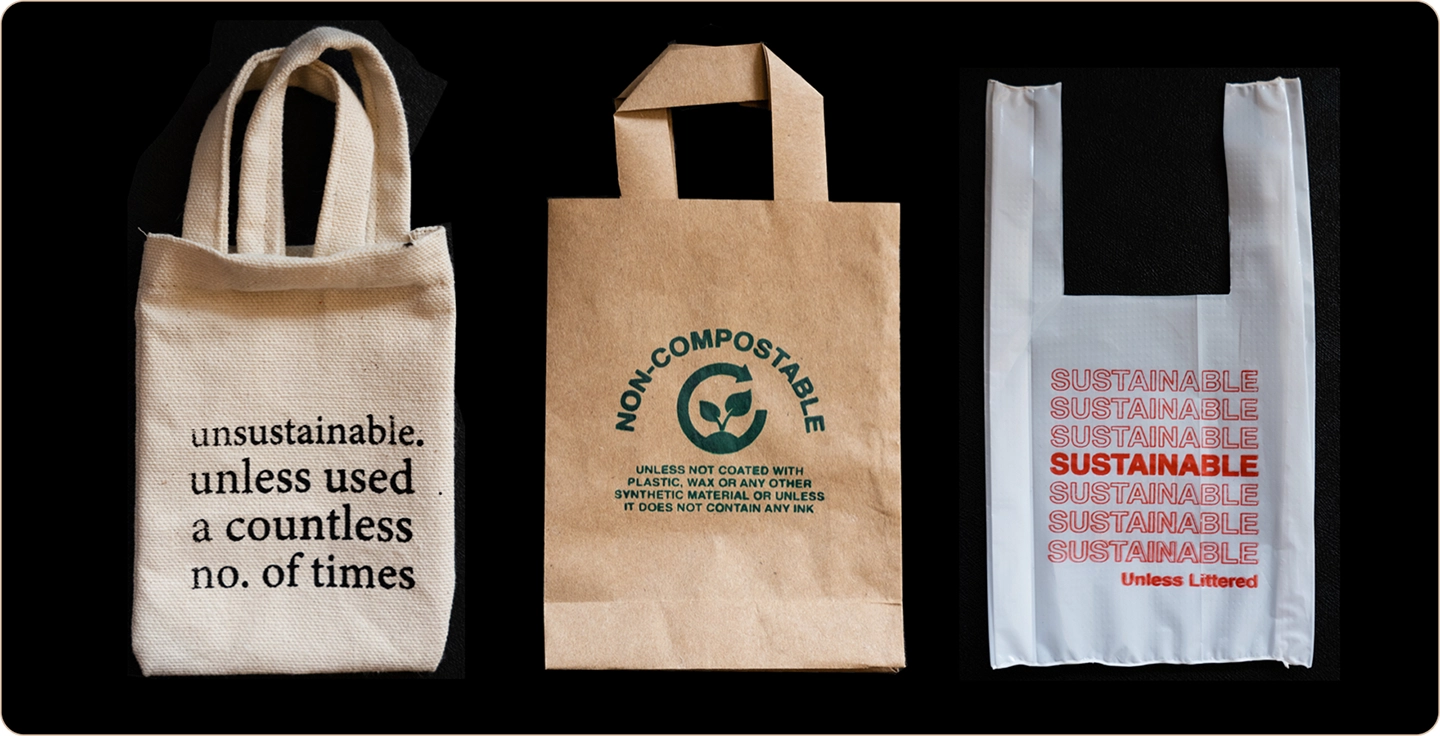
BAGS IN ORDER OF THEIR CARBON FOOTPRINT, HIGHEST TO LOWEST


  • A cotton bag that becomes unsustainable unless used countless times
  • A brown paper bag that is non-compostable if coated with wax or printed with ink
  • A plastic bag that is sustainable unless littered


MAKING OF BAGS


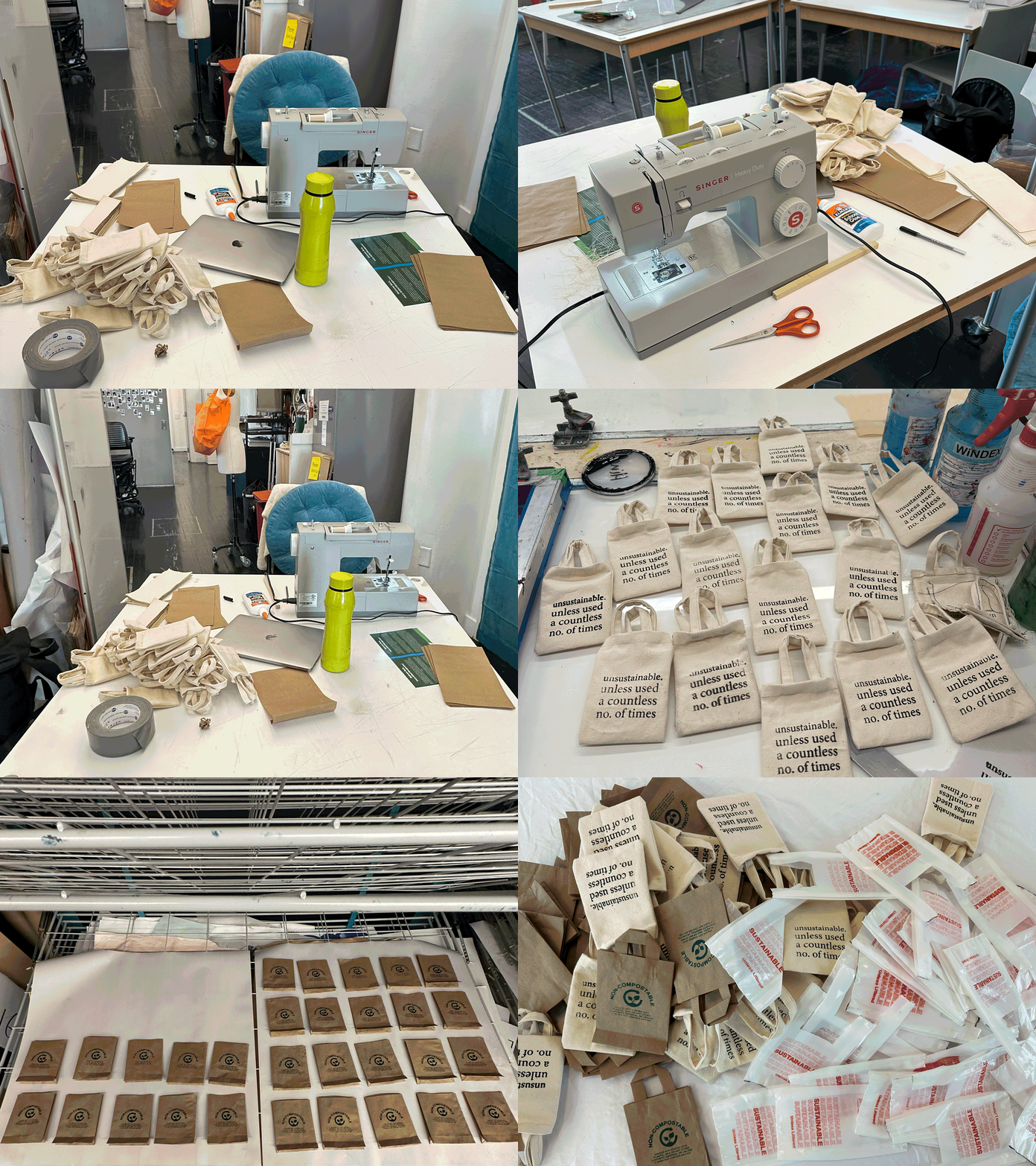
I hand-sewed and screen-printed hundreds of bags and distributed them to provoke surprise, reflection and dialogue around unintended consequences of our actions.


ENVIRONMENTAL WHATABOUTISM STORE FRONT


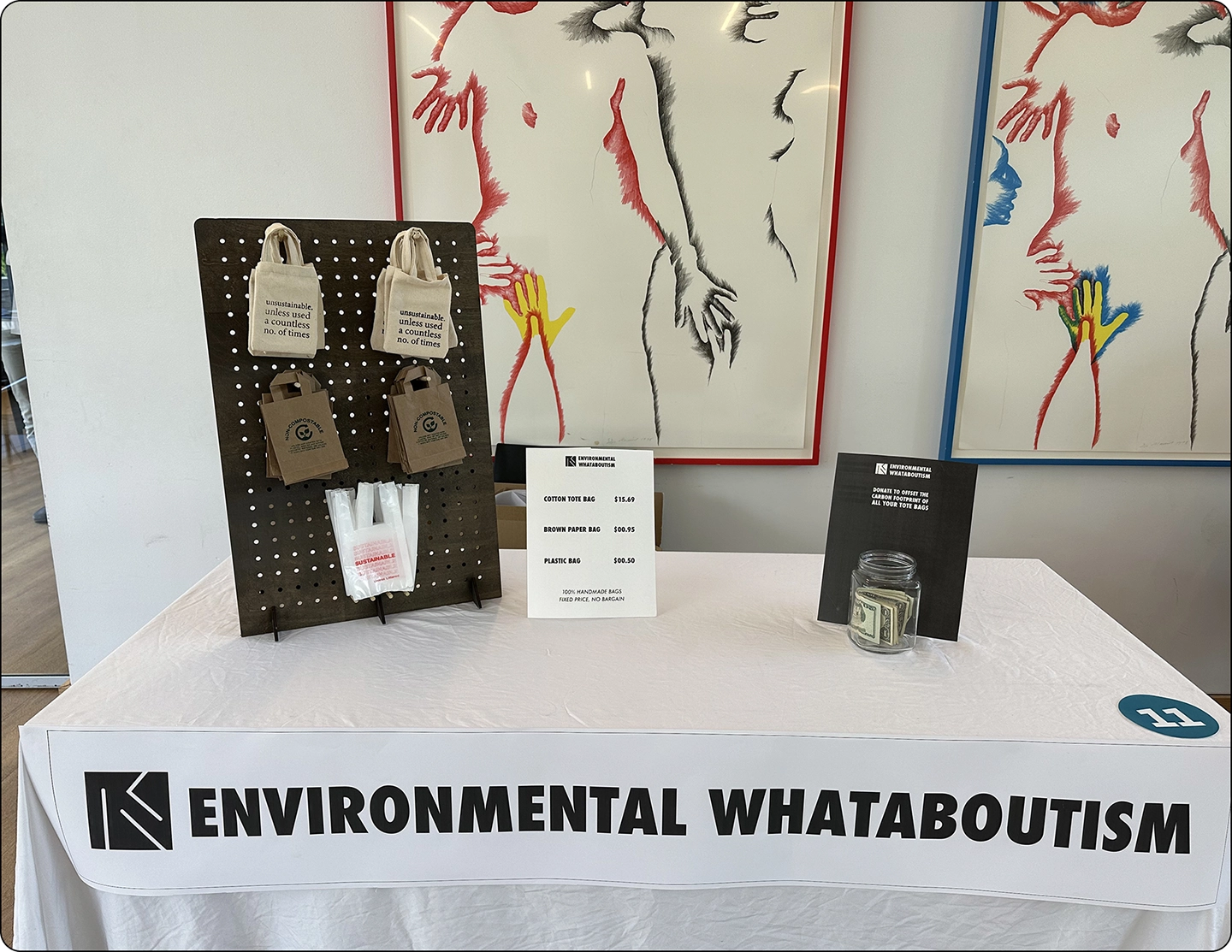
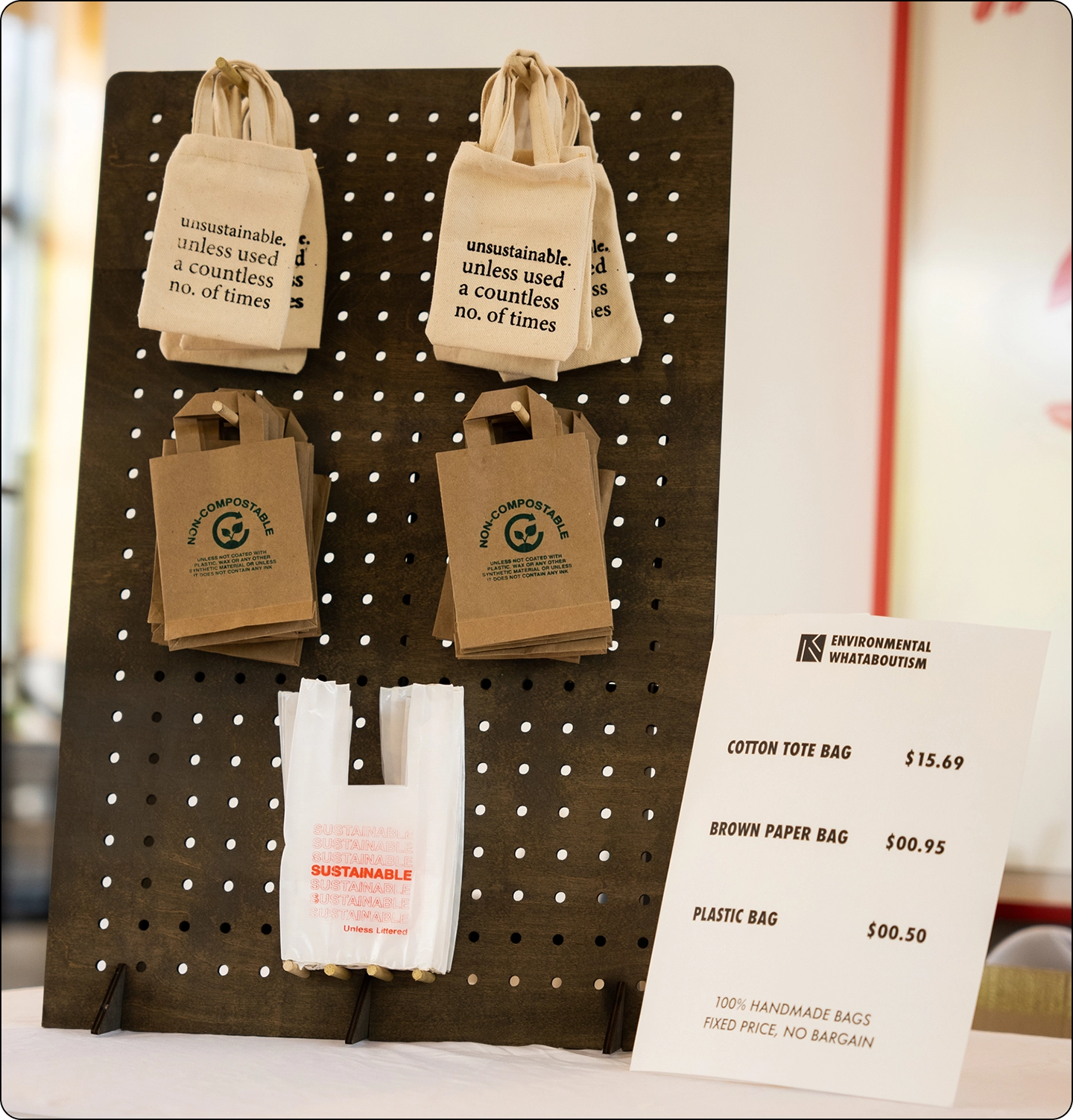
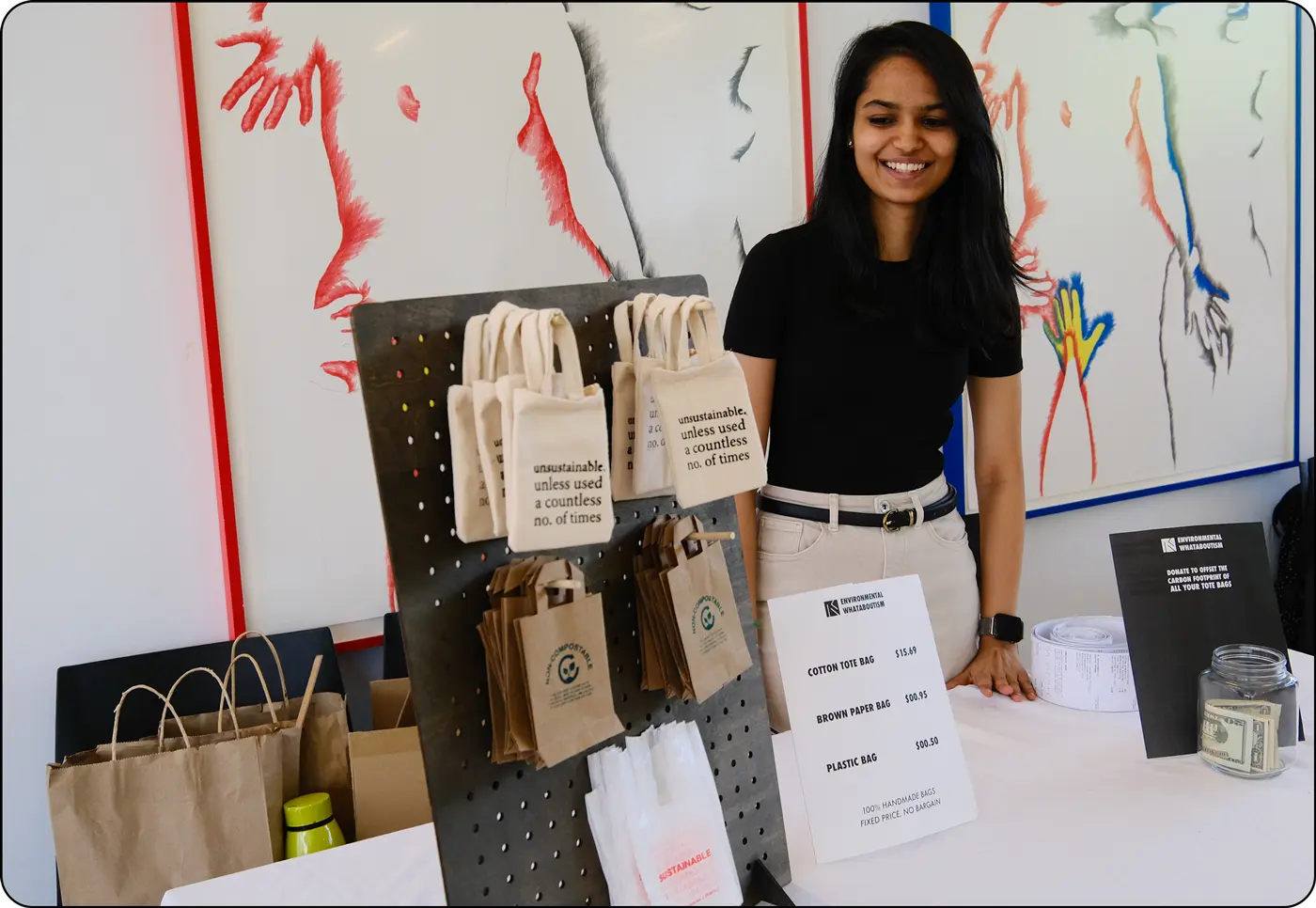
I also set up an Environmental Whataboutism storefront at the Transdisciplinary Thesis Exhibition, where people could choose a bag.


ENVIRONMENTAL ITEMIZED RECEIPT


Each bag came with a custom “receipt” listing all the factors contributing to its carbon footprint, helping people see the true impact of their choices. These unusually long receipts served as provotypes designed to prompt conversation and critical reflection.


 STANDUP ROUTINE


To reflect the project’s focus on rhetorical trade-offs, I presented the thesis as a stand-up routine, surfacing the contradictions, humor, and discomfort within sustainability decisions, making the research’s paradoxes both accessible and memorable.


Here’s a small snippet of the stand-up routine, reach out if you’d like to see the full talk.


SUSTAINABILITY DILEMMAS AS PART OF ETHICAL AND MORAL DILEMMAS


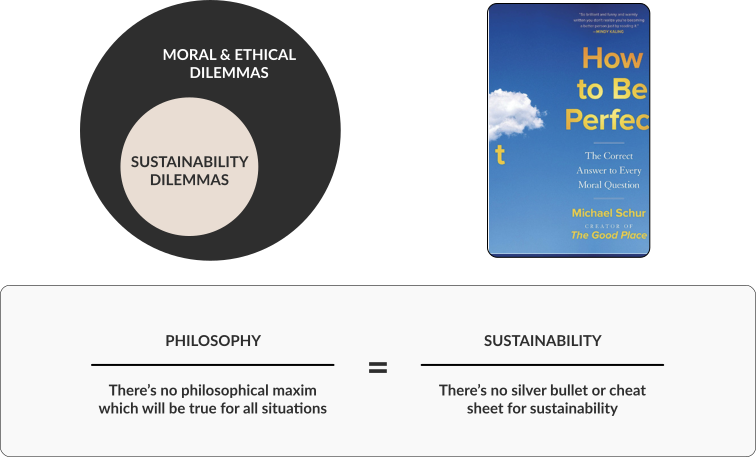
Through this exploration, I realized that sustainability dilemmas mirror moral and ethical dilemmas: there is no single rule that applies to every situation. Drawing on philosophical ideas from the book How to Be Perfect, I showed that sustainability, like ethics, has no universal “right” answer. It requires critical reflection and mindful attention to consequences.


THE TAKEAWAYS


After completing the research and creating the provotypes, I concluded that sustainability dilemmas rarely have definitive answers. What matters is cultivating the ability to think critically about everyday choices. Awareness in small decisions builds the muscle for larger, more meaningful ones.

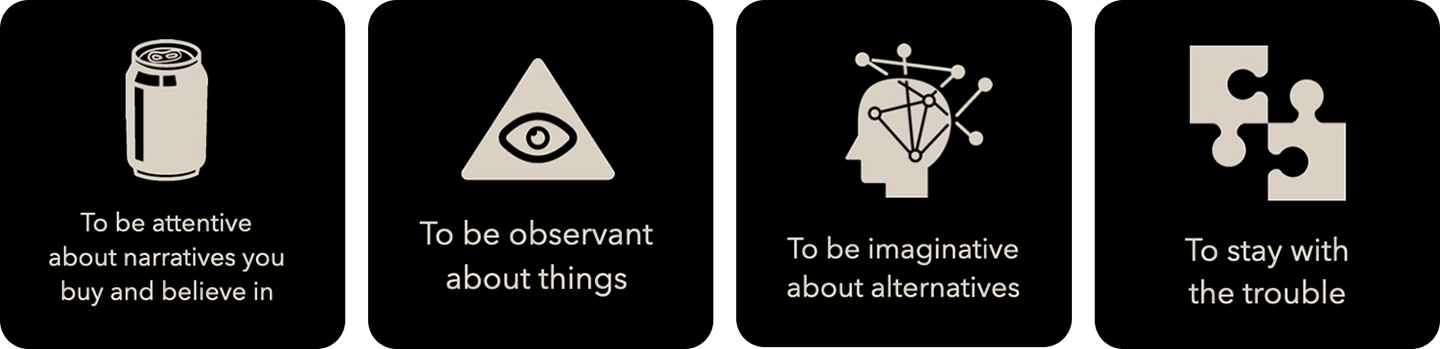
The project proposes four practices for this: being attentive to the narratives we believe, observant of our surroundings, imaginative about alternatives, and comfortable with ambiguity.


IMPACT


  • People realised and experienced the complexity and messiness of a global, interconneted, immaterialised and scalar world.
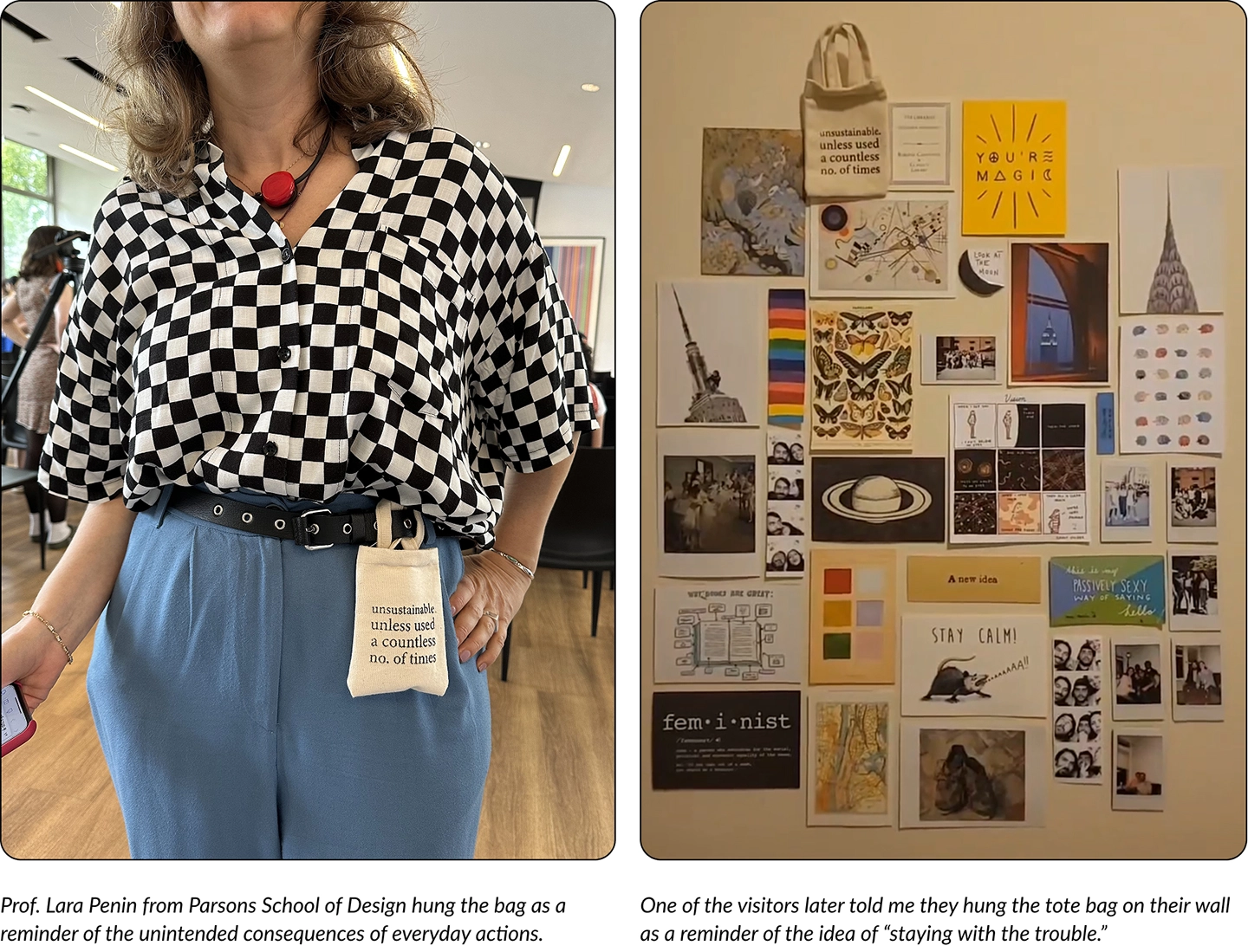
  • People walked away with a physical artifact that reminds them of the unitended consequences of their actions and also reminds them to cultivate the muscle to be mindful and critical of their actions.
  • People learnt four new ways to cultivate mindfulness and critical thinking while adopting new sustainable practices.